

Die Geschichte des Amethyst
Amethyst has a long and rich history. Archaeological finds of amethyst jewelry show that this gemstone was very popular in early high cultures. Finds such as amethysts set in gold rings, dated to over 2500 BC, impressively demonstrate the historical significance of the gemstone.
Its origin is cloaked in myth, from which its name is also derived: The god of wine, called "Dionysus" by the Greeks and "Bacchus" by the Romans, was a kind of "bad boy" of ancient mythology. Despite his divine mission to end sorrow and worry, Dionysus himself spread all sorts of mischief. It is told that one day, when he felt disrespected by a mortal, the inebriated Dionysus swore to take revenge on the next person who crossed his path. Then Amethyst came along, a young, innocent, beautiful girl and a fervent follower of the goddess Artemis. The enraged Dionysus sent two hungry tigers to tear the girl apart, and filled his cup with wine to watch the spectacle. The all-seeing Artemis intervened helpfully and transformed Amethyst into a quartz statue, as pure as her virtue. This magic saved the girl from being devoured by the tigers, but it could not be undone. Seized with remorse, Dionysus shed tears into his wine. When he subsequently collapsed, he spilled the wine over the girl's statue, thus creating the purple gemstone we know as amethyst.
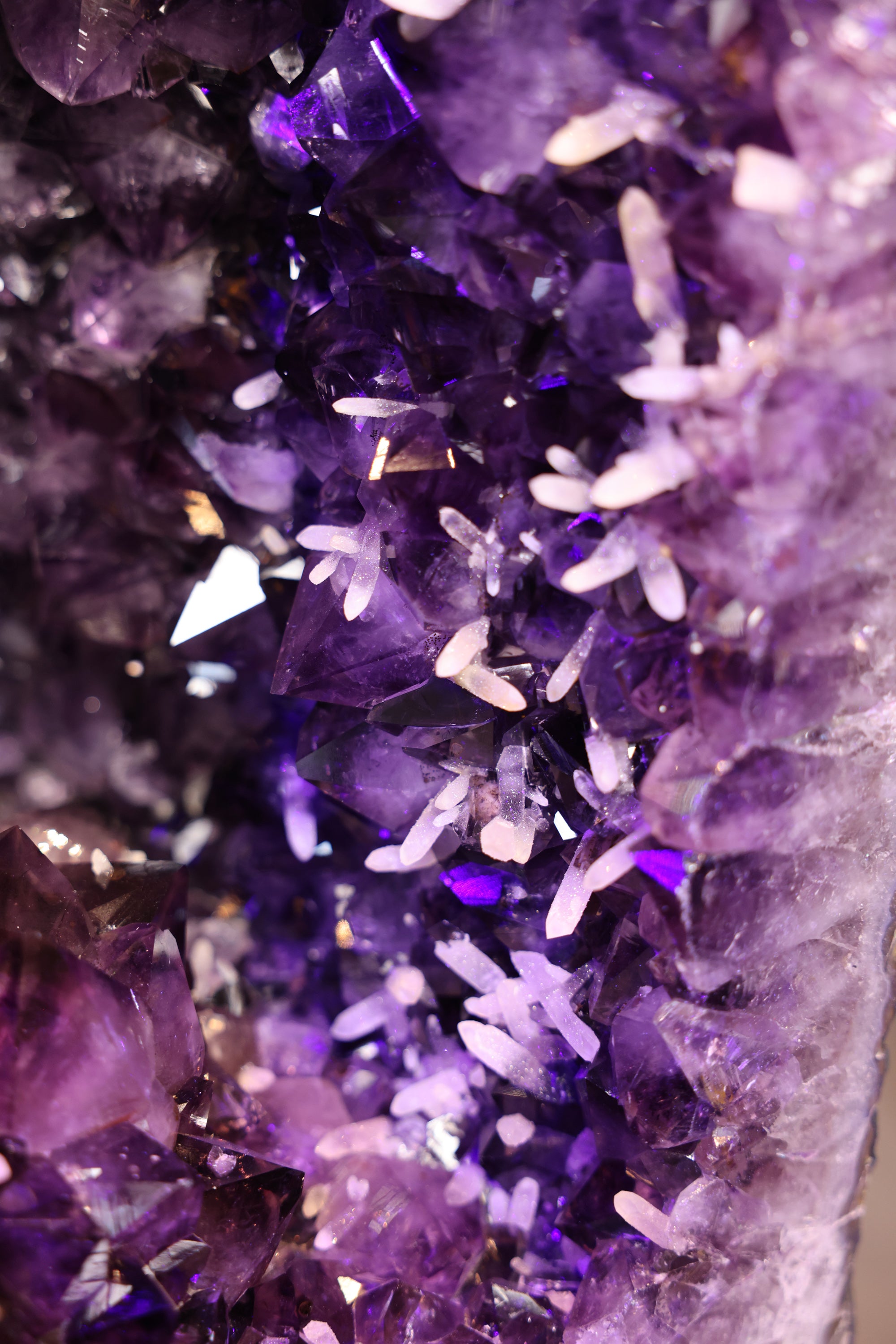
According to this story, the stone was frequently incorporated into chalices in ancient times and worn as an amulet against drunkenness. Whether the ancient Greeks really believed that amethyst protects against intoxication is not known. At least water drunk from an amethyst chalice can look quite similar to red wine.
The gemstone was even mentioned in the Bible. In the Revelation of John in the New Testament, amethyst is mentioned as one of twelve gemstones adorning the breastplate of the high priest Aaron.
Where does amethyst come from?
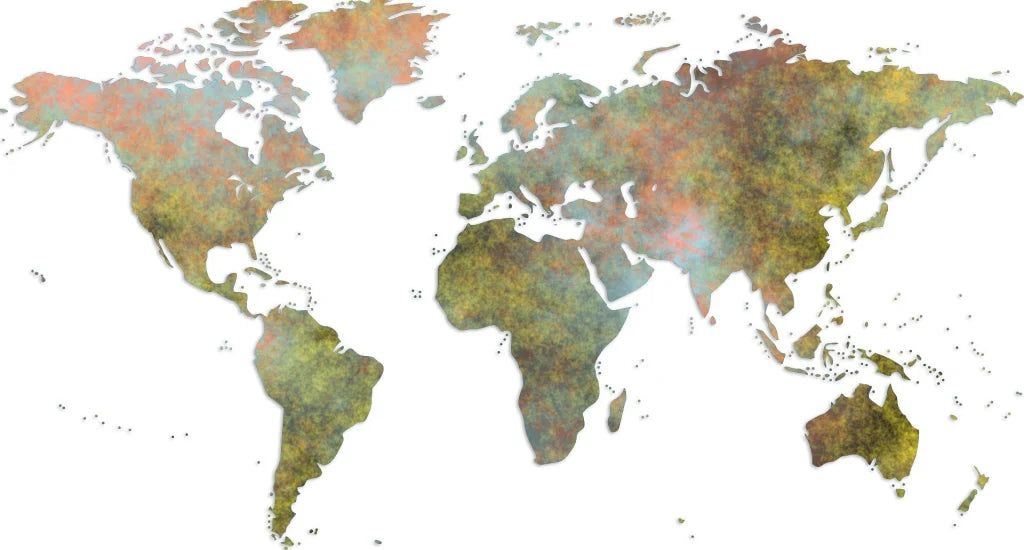
Amethysts are widespread and occur in various quantities and qualities on all continents. However, large and pure specimens suitable for the production of gemstones are not as common. They are mostly found in cavities in hydrothermal veins and in volcanic rocks. Currently, Brazil is the most well-known mining area. Brazilian amethysts first came to Europe in 1727 and still play a prominent role in the amethyst trade today. Rio Grande do Sul is a significant mining area for quartz and especially for amethysts. Ametista do Sul, a city in Rio Grande do Sul, demonstrably has the largest amethyst formation in the world and is even referred to as the amethyst capital. Uruguay also has very good deposits: The Uruguayan amethyst has an extraordinarily rich, deep violet color. Other important sources are in Madagascar, Kenya, Morocco, and Zambia. The deep purple Siberian amethyst is now historical, although the term "Siberian amethyst" is sometimes falsely used for amethysts of various origins with particularly intense color. Amethyst deposits can also be found in Europe, for example in Portugal and Spain, Switzerland, Scotland, Ireland, England, France, and Italy. Amethyst is also found in Germany, for example in Steinkaulenberg near Idar-Oberstein. Europe's largest amethyst deposit is located in Maissau in Lower Austria and was discovered about 150 years ago.
Die Entstehung des Amethyst
Amethysts are of hydrothermal origin and crystallize at temperatures up to 250°C from iron-bearing solutions. Natural radiation promotes color formation. The quartz crystals are found in the rock, in large air pockets formed by lava. Therefore, they are commonly found today in rock cavities, the so-called geodes, but also in veins and fissures. Amethyst geodes are popular decorative objects and can span several meters.
Amethyst Quality Characteristics
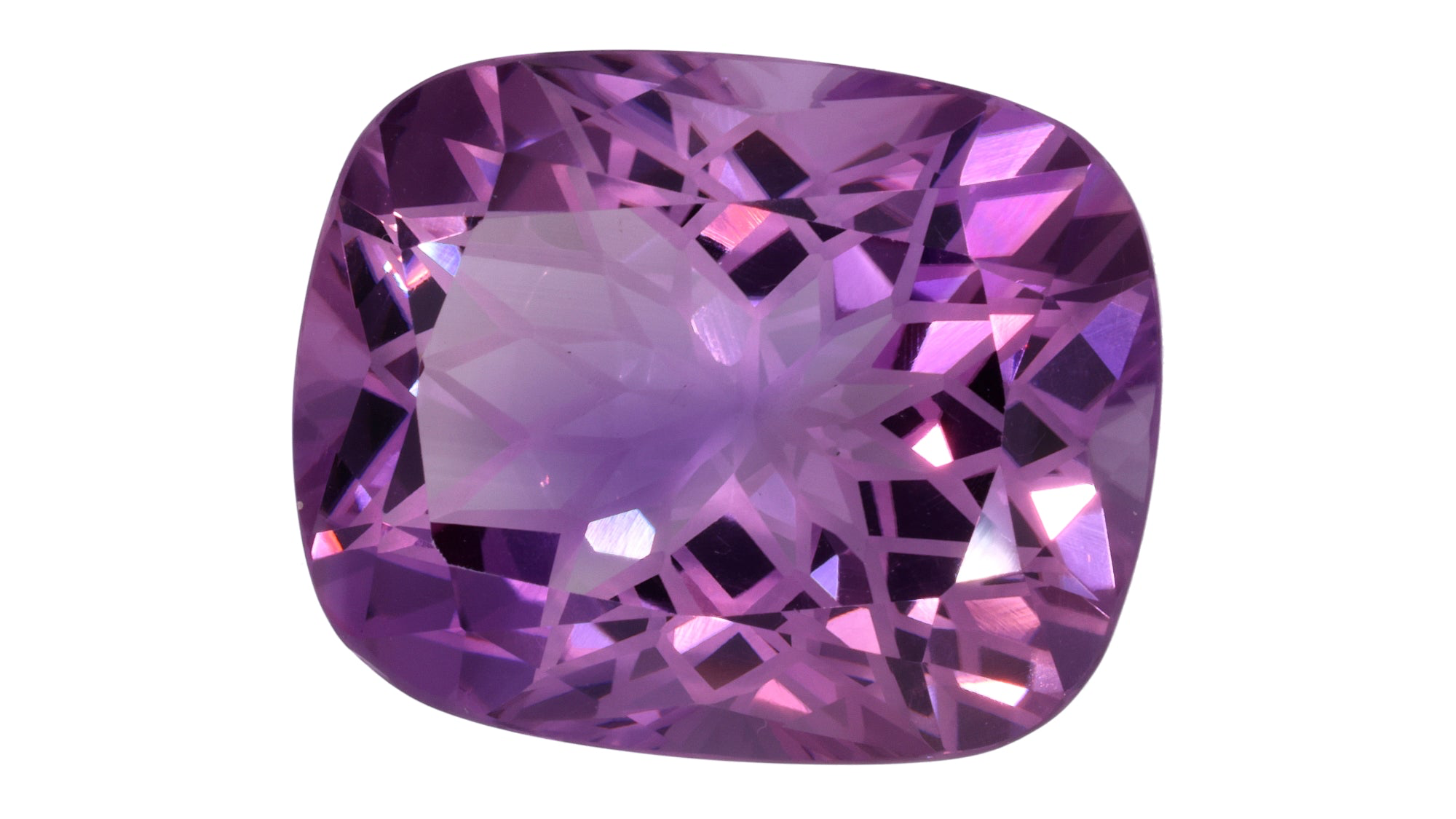
Amethyst is one of the most well-known quartz varieties in the world. However, amethysts differ greatly in color, structure, origin, and processing. These differences determine the respective quality level and thus also the value of a piece.
Generally, the quality of an amethyst is not only judged by its color. Several factors are decisive, which together shape the overall appearance of a stone.
The Most Important Criteria for Evaluating Amethyst
Color Intensity
Color is the central quality characteristic of an amethyst. Deep purple to dark purple crystals with even color distribution are particularly sought after.
High-quality amethysts show:
- a rich violet without a gray cast
- clear color depth
- as little color zoning as possible
Very light or highly uneven color tones, on the other hand, are considered a lower quality level.
Crystal Structure and Luster
In addition to color, the formation of the crystals plays a major role. Finely formed points with strong natural luster appear more valuable than dull or damaged crystal surfaces.
Typical characteristics of high quality are:
- clearly defined crystal points
- dense crystal coverage
- natural light reflection
Especially in geodes or cathedrals, the uniformity of the crystal structure significantly influences the overall impression.
Transparency of the Crystals
High-quality amethysts have good internal clarity. Although inclusions are natural, they should not dominate.
Transparent points enhance the depth of the violet tone and create a lively effect in the light.
Origin as a Quality Indicator
The origin of an amethyst says a lot about its typical color characteristics.
Amethyst from Uruguay is considered particularly high-quality worldwide, as it often shows a very dark and intense violet color. The crystals usually grow compactly and densely.
Amethyst from Brazil is also widespread. It often shows larger crystals and lighter color tones. Particularly large cathedrals often come from this region.
Both regions of origin can supply high-quality pieces, but they differ significantly in appearance.
Quality Levels of Amethyst: AAA, AA and A Simply Explained
Amethysts are often categorized in the trade by quality levels such as AAAA, AAA, AA or A. These designations help to quickly classify the color intensity, clarity, and overall impression of an amethyst. It is important to note, however, that there is no globally binding rating system for amethyst. The classification therefore serves as an orientation within the gemstone trade.
AAAA quality describes particularly rare amethysts with a very dark, even violet and high clarity. AAA amethyst also shows a strong color and a harmonious appearance with only minor natural inclusions. AA quality has a good violet color but may show slight color zoning or inclusions. A quality usually includes slightly lighter amethysts with more visible natural structure.
For amethyst geodes and cathedrals, origin, crystal density, proportion, and spatial effect also play an important role. Amethyst from Uruguay, in particular, is often considered high-quality due to its intense violet color. Overall, the quality of an amethyst always results from the interplay of color, structure, transparency, and origin – not from a single characteristic alone.
Amethysts to browse


Amethyst Cluster AA+A Grade (#204)
Regular price
From €17
Sale price
From €17
Regular price


Agate Tips - little eye-catchers (#200)
Regular price
From €10
Sale price
From €10
Regular price

€111 Amethyst Mystery Box - €150 Value
Regular price
€111
Sale price
€111
Regular price

Agate Gemstone Bowls (#182)
Regular price
€30
Sale price
€30
Regular price


