


Mineralogie & Kristallstruktur
Amethyst belongs to the quartz group. Quartz crystallizes hexagonally, which leads to the typical pointed crystal forms. These crystals form in volcanic rock geodes, which occur as cavities in cooled lava flows. The crystals are often translucent to transparent and show an impressive play of colors when exposed to light. Inclusions or growth fissures are natural characteristics that give each stone an individual appearance.
The quartz varieties are divided into two groups: they consist either of a single crystal (macrocrystalline) like amethyst, but also citrine, tiger's eye or rose quartz, or have a crystal structure that is so fine that individual particles cannot even be recognized under a microscope (cryptocrystalline quartzes such as agate, carnelian, jasper and onyx). The Gemological Institute of America (GIA) has generally classified quartz as a Type II gemstone. However, all qualities exist, so they can be transparent, translucent or opaque. Mineralogically, amethysts consist of silicon dioxide (SiO2).

The Colors of Amethyst
Amethyst's color ranges from light lilac to rich purple and is caused by trace elements of iron and natural radiation. In addition to the well-known violet hues, there are also green amethysts, which are traded under the name prasiolite. The color distribution within an amethyst can be uneven, but an amethyst gemstone for jewelry is usually cut in such a way that no color zones are visible, and the color is evenly distributed throughout the entire gemstone. Origin plays an important role in the color of amethyst. Each country of origin has its own distinct color accents. Generally, a pure violet is preferred, but amethysts often show a bluish, grayish, or even pinkish hue. Ultimately, personal taste should decide which amethyst color is right. Often, the tips of amethysts are darker than the base (tip amethyst). This can even be pure white, i.e., made of pure quartz.
Geologische Besonderheiten
For amethyst to form, several geological conditions must converge over a very long period. Crucial is, first and foremost, the presence of volcanic cavities, known as geodes or vugs, which form during the cooling of lava or volcanic ash. These cavities provide the ideal space for minerals to accumulate and slowly form crystals. Over time, mineral-rich water, abundant in silicon dioxide and trace elements, penetrates these cavities. A low proportion of iron ions is particularly important, as without this element, no violet coloration could develop. The water circulates through fine cracks in the rock, continuously depositing thin layers of silicon dioxide, thereby enabling the gradual growth of typical hexagonal quartz crystals. This process occurs extremely slowly, often over millions of years. Conditions must remain relatively stable throughout this period: consistent temperatures, rather constant chemical compositions, and very slow cooling of the rock. Any disturbance, such as sudden temperature changes or alterations in the mineral content of the water, can affect growth, lead to inclusions, or even halt the process.
Deinen Amethysten entdecken


Amethyst Cluster AA+A Grade (#204)
Regular price
From €17
Sale price
From €17
Regular price


Agate Tips - little eye-catchers (#200)
Regular price
From €10
Sale price
From €10
Regular price

€111 Amethyst Mystery Box - €150 Value
Regular price
€111
Sale price
€111
Regular price
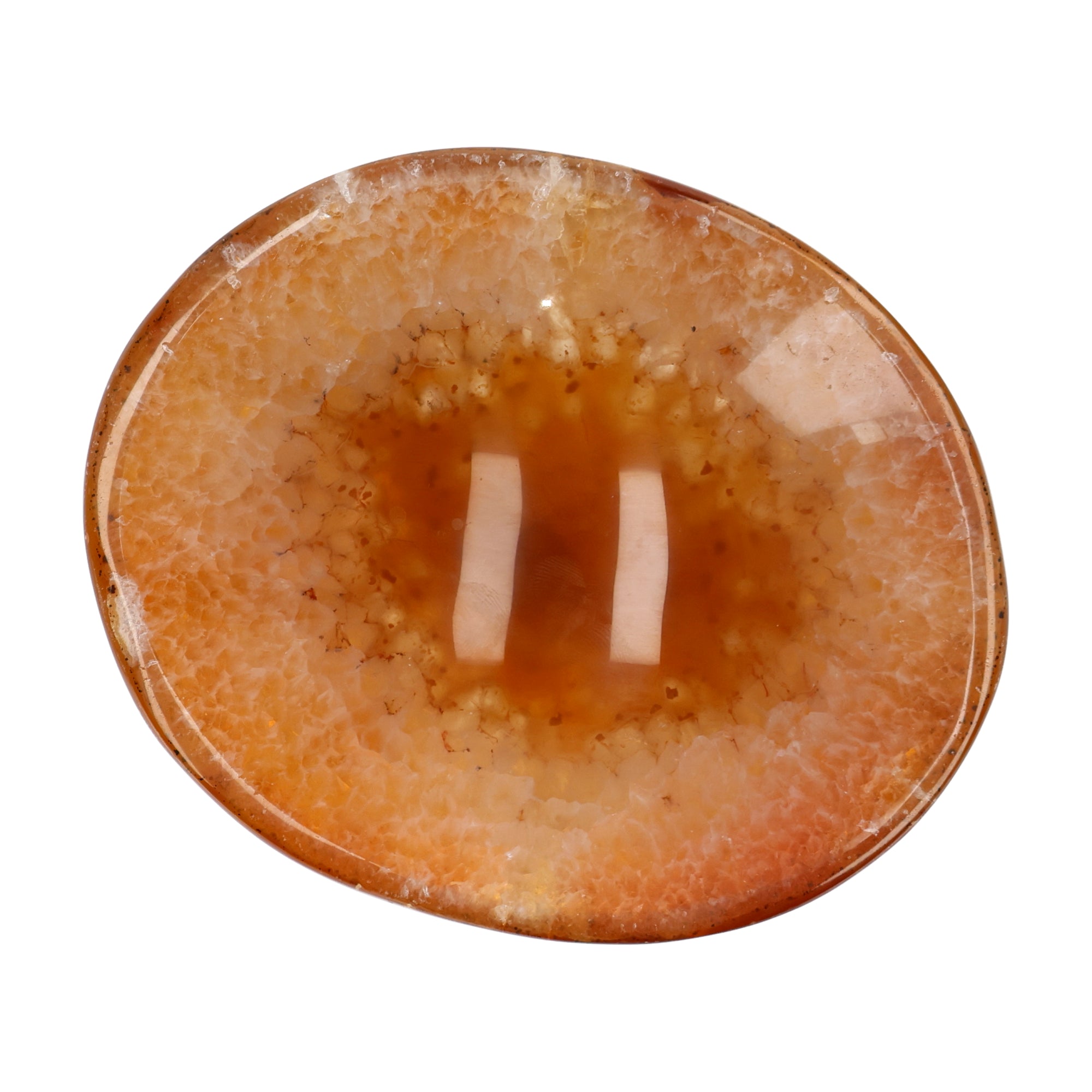

Agate Gemstone Bowls (#182)
Regular price
€30
Sale price
€30
Regular price


